abc carpet & home redesign
Strategically drove the end‑to‑end redesign of abc carpet & home’s product detail page, doubling revenue and AOV.
Role: Lead Product Designer
Impact
Shaped product goals and scope
Drove end-to-end design vision
Aligned in-house and agency teams
Defined and synthesized UX research
Conducted leadership interviews
Developed mockups and prototypes
Oversaw build for quality and feasibility
Advocated for an A/B test that delivered clear results
Overview
Redesigning the product page was a top priority for leadership at abc carpet & home. Since their products were high‑consideration purchases, users needed more reassurance throughout the buying journey. Our goal was to increase customer confidence and ultimately improve conversion. I served as the Lead Product Designer, partnering closely with the Lead Product Manager and an external agency responsible for the build. Throughout the process, I drove the design vision: collaborating directly with the agency to ensure alignment, feasibility, and fidelity to the intended experience. Beyond the core team, I also worked with the content team and other cross‑functional partners to support a cohesive launch.
“How might we improve shopper confidence to buy high‑consideration products online?”
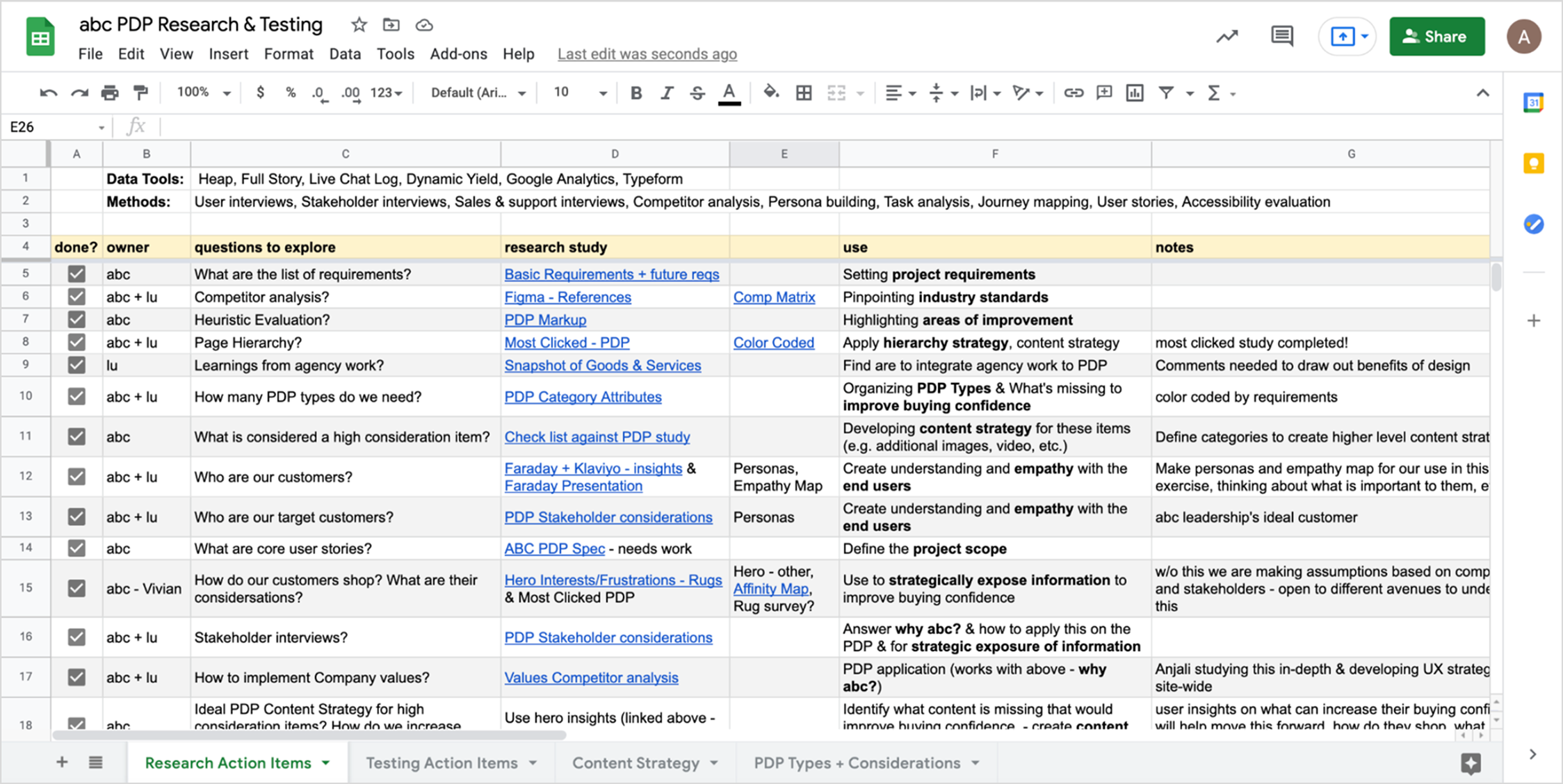
Senior leadership’s goal helped us hone in on preliminary research. Since refining project scope required collaboration cross-team, we needed clear ownership over each research initiative to keep the project efficient and focused. I proactively created a detailed spreadsheet outlining responsibilities and drivers for every research component, ensuring transparency, accountability, and smooth coordination across teams.
Research Learnings
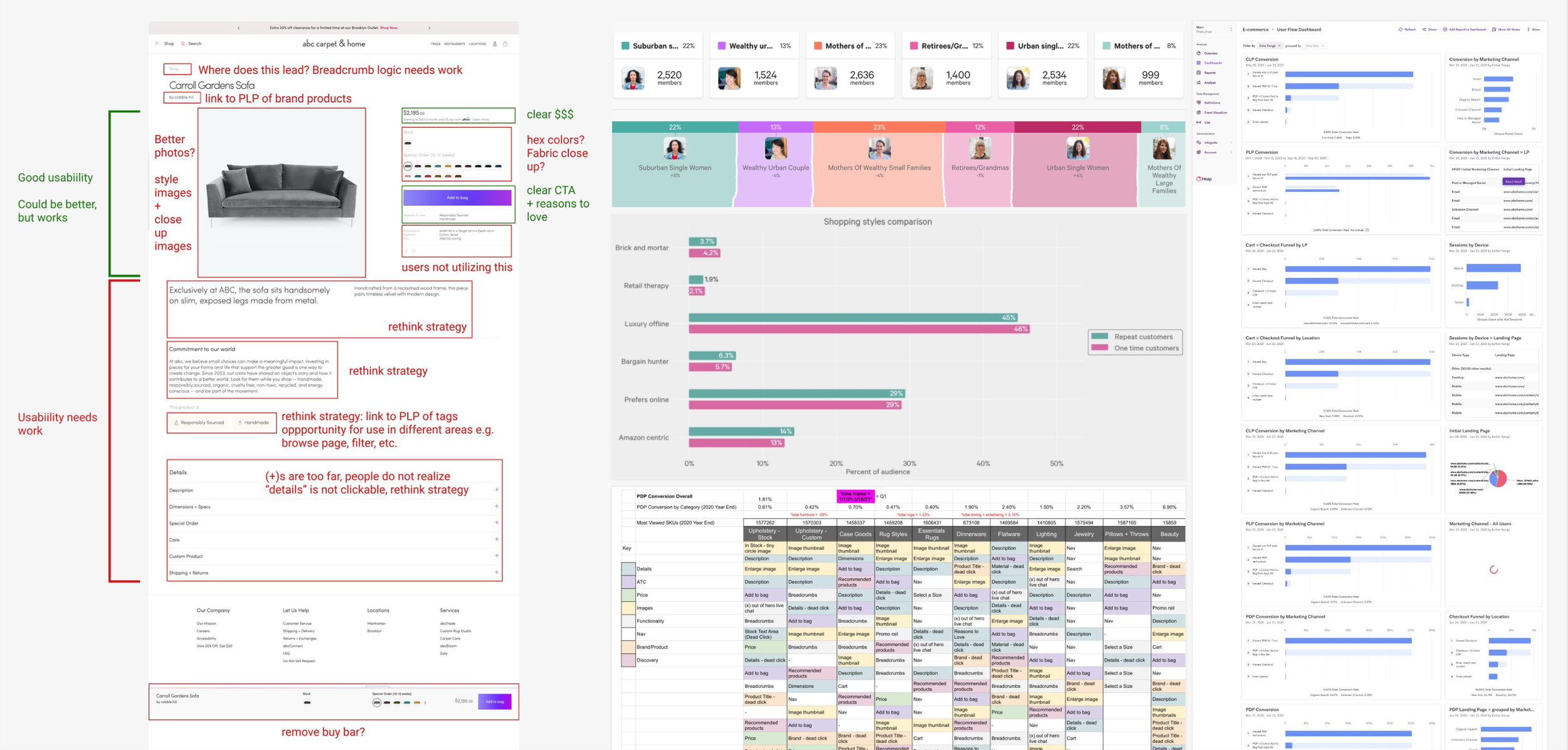
From our research, user studies, and documentation, we were able to clearly define and properly scope the project. I conducted a FullStory analysis to understand how users were interacting with the existing product page, and one insight stood out: the most‑clicked elements were buried at the bottom of the page. I used this finding to reshape the new product page’s UX, elevating those high‑value interactions to the top fold where users could access them immediately.
We also consolidated our user personas, clarified our target audience, and reviewed conversion data across key pages. Together, these insights created a strong foundation for the redesign and informed every decision that followed.
Applying Research
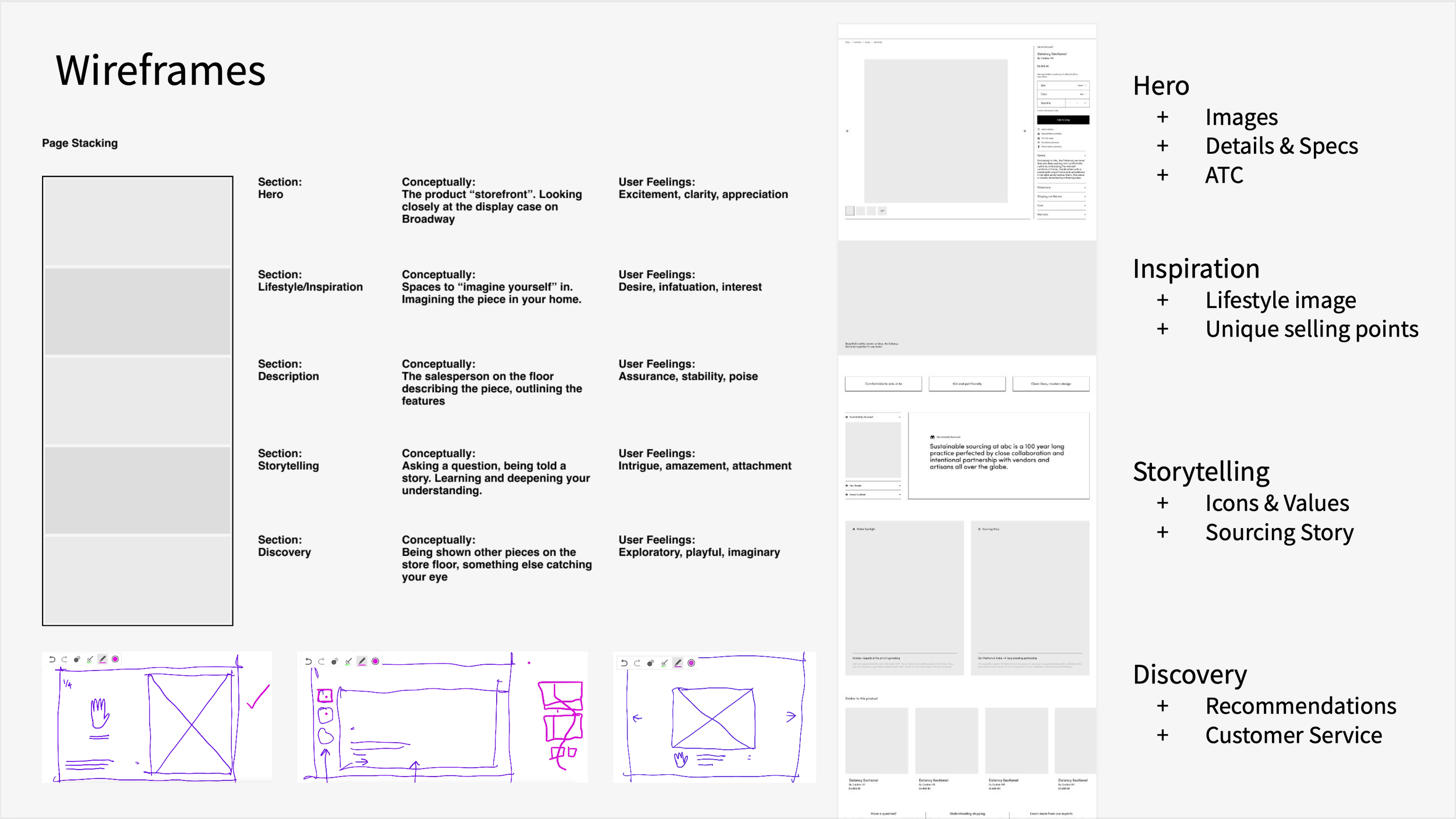
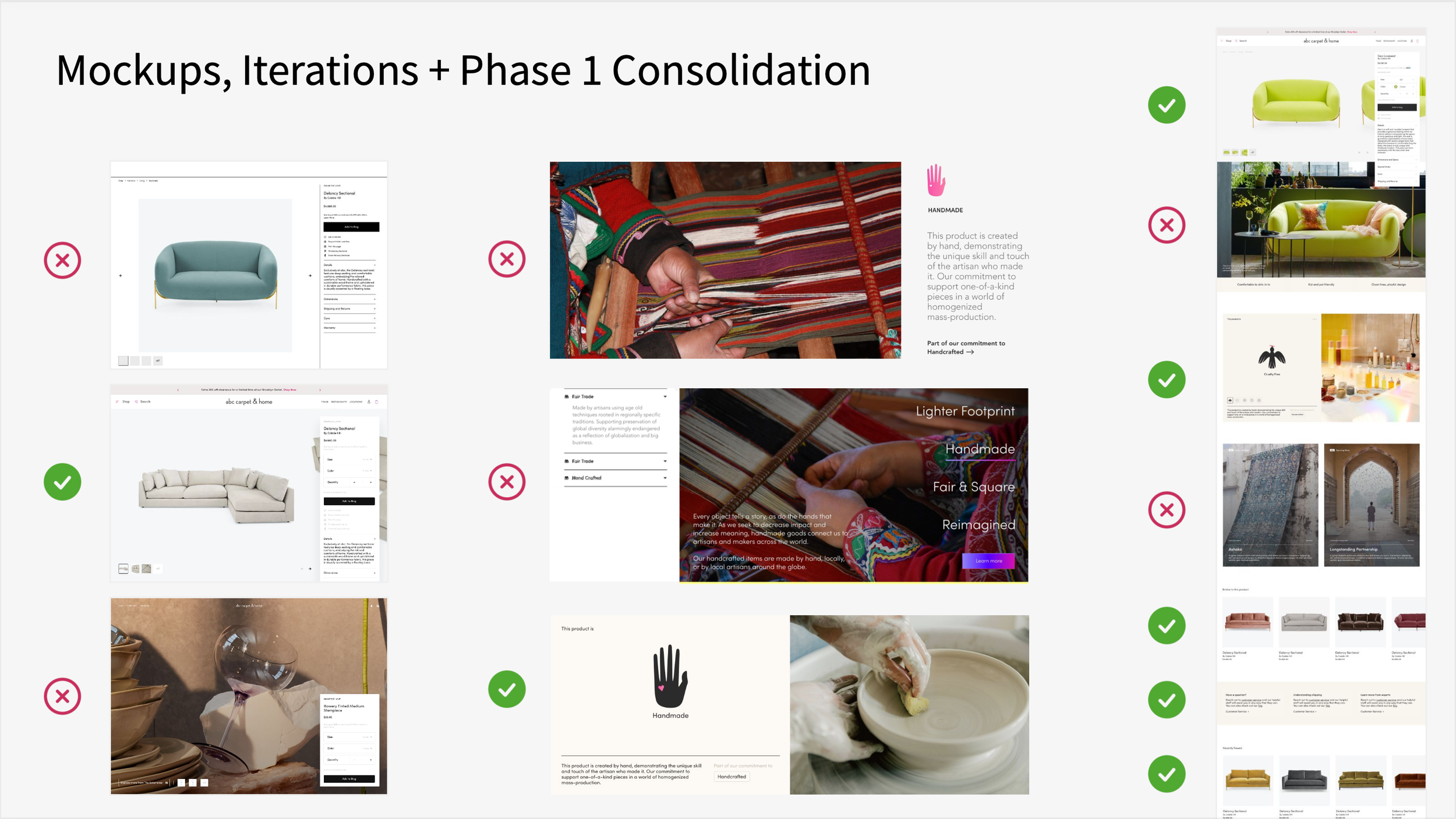
Based on the analysis, I defined the overall structure and intent of the UX strategy. After iterating on multiple strategic approaches and presenting variations to stakeholders, we evaluated the pros and cons of each direction, aligned on what best supported the brand, and agreed that an A/B test would be the most effective path if timelines allowed. Throughout this process, I led the design effort: guiding the agency’s designer and engineer, providing feedback, and ensuring the work was optimized for build. Below, you can see the evolution of the UX strategy, from early wireframes, collaborative whiteboard sketches, iterative mockups and MVP scoping.
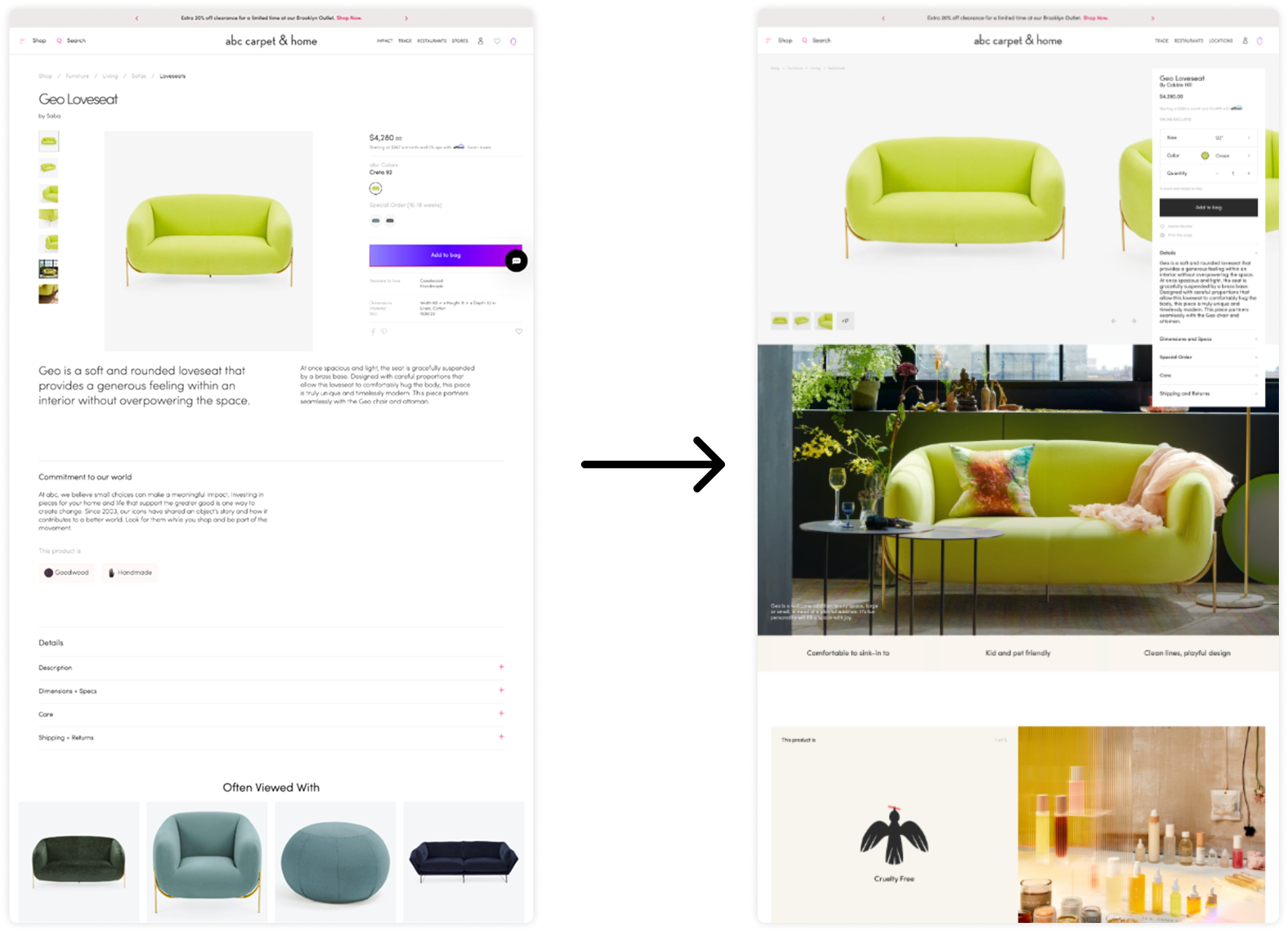
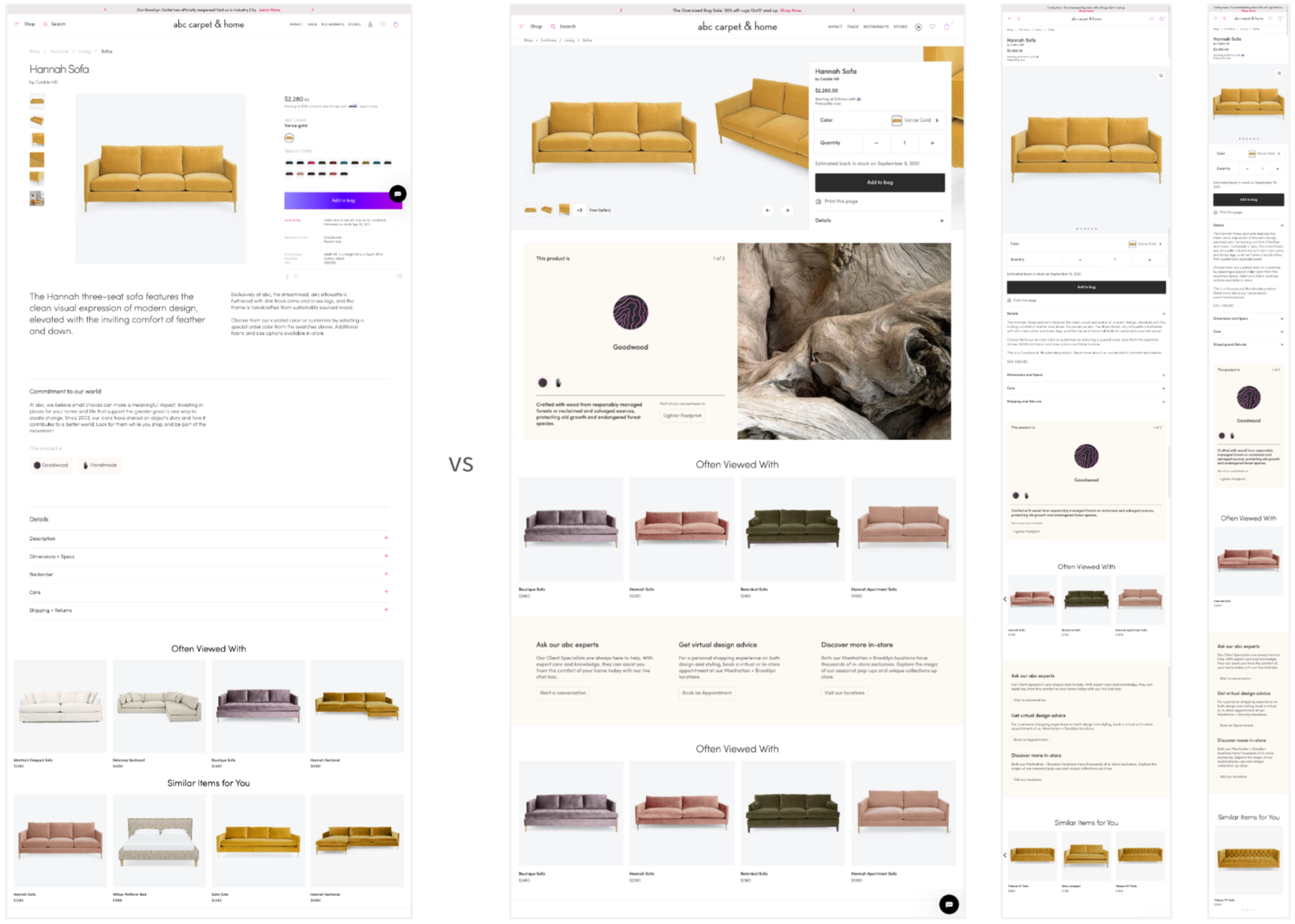
A/B Test: Original vs. Redesign
Once the designs, data, and content were fully approved, I led the handoff and partnered with our agency to bring the vision to life. The build required extensive QA and close cross‑team collaboration, but ultimately we shipped the redesigned experience and launched the A/B test. After running the test for a little over two weeks, the results were undeniable: both overall revenue and average order value were nearly double compared to the original experience. It was a clear validation that the redesign based in user-centered thinking was a success.
Total Revenue
Average Order Value
Reflection
As the Lead Product Designer at abc carpet & home, my day‑to‑day centered on developing new product features and collaborating closely with product managers and two remote development teams to bring those designs to life. This project surfaced several valuable learnings:
Thoughtful phasing is essential. Our PM and I realized the importance of structuring project phases more intentionally to ensure we could launch on schedule.
A/B testing is only the beginning. While our initial test was successful, phase two will focus on refining the design, resolving bugs, and improving overall usability.
Designing with engineering in mind accelerates delivery. Creating designs that align with how components are coded reduces friction across teams.
I welcome you to explore abc’s current web platform and experience the latest functionality firsthand.